Trigeminal neuralgia

Introduction
This painful facial condition has been described in the medical literature for over 100 years. The symptoms are described as brief stabbing or electrical pains on one side of the face. The pain can sometimes be triggered by touching a particular area of the face, eating or brushing the teeth. Often the pain occurs without warning and may disappear automatically. Between episodes of severe pain patients may be without any pain at all. After some time patients may experience a permanent burning sensation in the face. This condition is often confused with dental pain and many patients have already extracted some teeth before a correct diagnosis is made.
According to the currently prevailing view, trigeminal neuralgia is caused by demyelination of the trigeminal nerve. This nerve carries information to the brain about what touches the face. This information is carried by small nerve fibers that are isolated from each other by myelin (as wires are isolated). If this insulation is lost (demyelination), a "short circuit" can occur between the nerves. Signals carried by one nerve fiber can spread to more nerve fibers and flood the brain with signals that are perceived as the pain of trigeminal neuralgia. The trigeminal nerve can lose myelin in some diseases such as multiple sclerosis or, more commonly, from the constant pressure of an abnormally placed artery.
The trigeminal nerve is made up of 3 branches (hence the name "trigeminal") that come together as the nerve enters the skull. The first branch (ocular or V1) controls the sensations of the forehead. The second branch (maxillary or V2) covers the area under the eye to the corner of the lips. The third branch (mandibular or V3) covers the area from the corner of the lips to the corner of the lower jaw. The pain of trigeminal neuralgia is often felt in only one area (usually V1 or V2), but in severe cases it involves all three branches.
Drug treatment
Most patients with trigeminal neuralgia can be treated with drugs that moderate nerve signals. Drugs such as Tegretol, or Neurontin (commonly used to prevent seizures in epilepsy) can reduce or eliminate pain. Each of these drugs can cause, at high doses, side effects such as catarrh, nausea, unsteady gait, and slowed thinking. Surgery is aimed at those patients who either cannot tolerate these side effects or continue to have pain despite their medication.
Surgical treatment
The surgical procedures most commonly used today are:
- Percutaneous thermocoagulation of the meningeal ganglion,
- Percutaneous balloon compression,
- Transdermal injection of glycerol,
- Microvascular nerve decompression.
Each procedure has pros and cons, and the preconditions for surgery should be discussed with the neurosurgeon. A large number of the above procedures are performed annually in our clinic and there is a long experience with excellent results (over 300 patients operated on in the last decade). Some of the above procedures are performed exclusively in our hospital (balloon compression for trigeminal neuralgia). The procedure we choose is individualized according to the patient and the pros and cons of each intervention are discussed with the patient.
Microvascular decompression (MVD microvascular decompression)
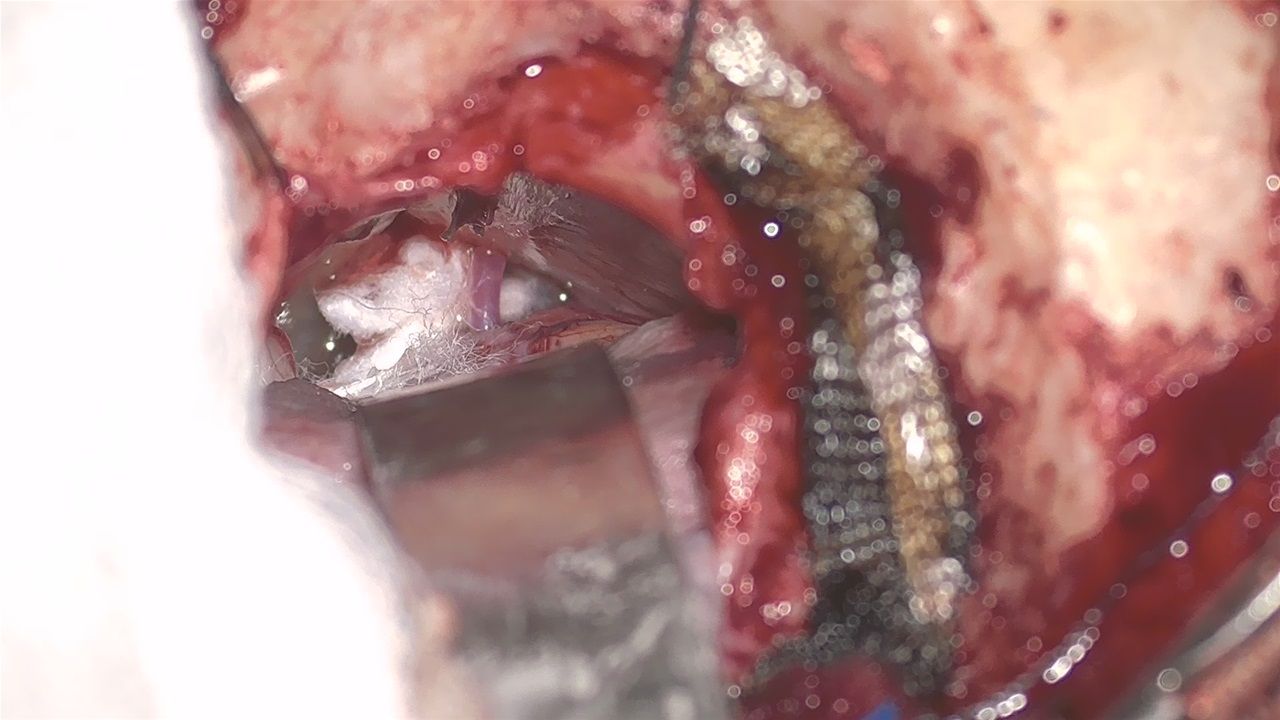
Microvascular decompression of the trigeminal nerve is the causative and indicated method of treatment in younger individuals. With a 2 cm lateral hyponeurotomy, the trigeminal nerve is separated from a vessel that presses on it (usually the superior cerebellar artery) and a special material (Teflon) is placed between them to prevent contact. The improvement in pain is immediate and usually lasts for life. The operation takes about 2 hours and is performed under general anaesthesia.
Percutaneous balloon compression (BC balloon compression)
Balloon compression is a percutaneous method in which a microcatheter is inserted into the trigeminal ganglion and a balloon is inserted and a balloon is used to stretch and destroy the nerve fibres. It is the method of choice in older people, has minimal side effects and provides immediate pain relief. Pain remission usually lasts for 5 years. It is performed under general anaesthesia for 30 minutes.
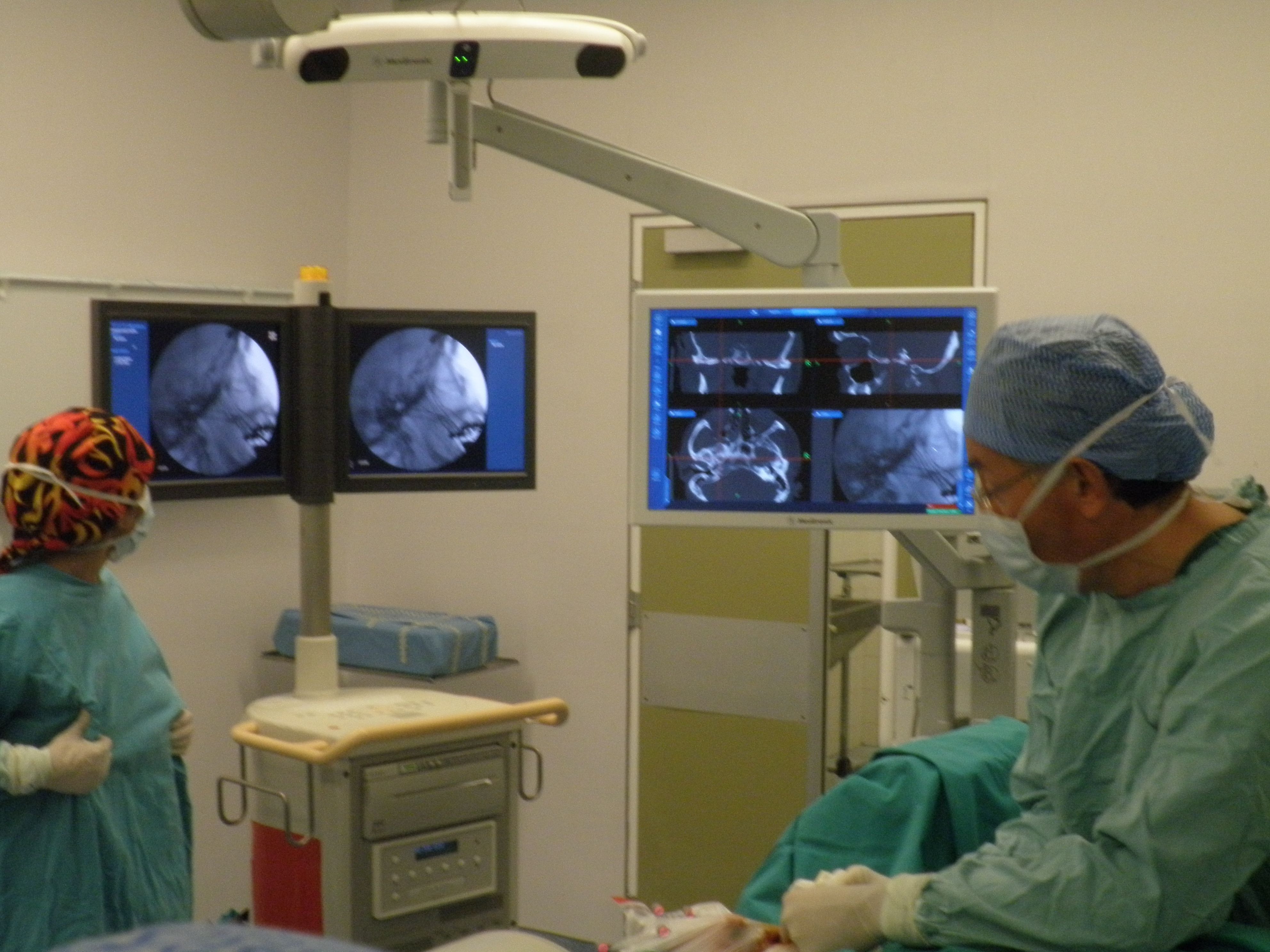 View of the operating room during percutaneous balloon compression.
Microvascular trigeminal decompression, with the superior cerebellar artery pressing on the nerve.
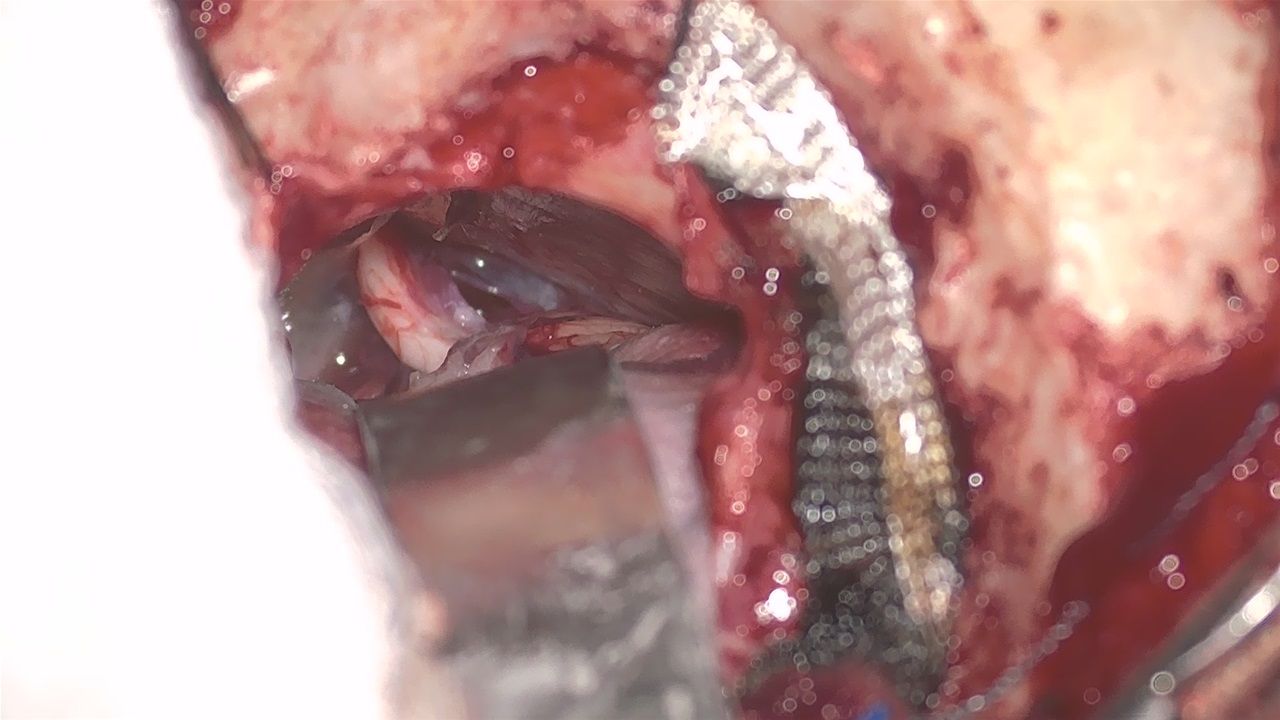
Removal of the artery from the trigeminal artery.
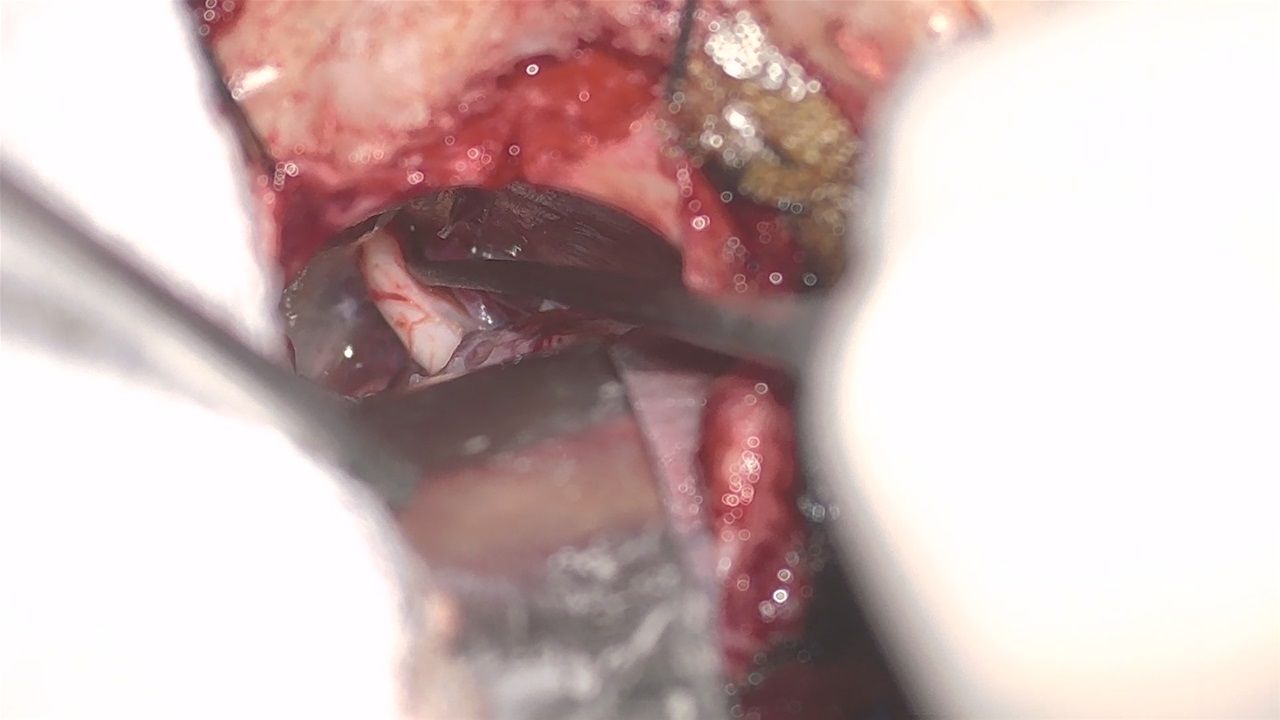
Placement of teflon between the trigeminal artery and the artery.
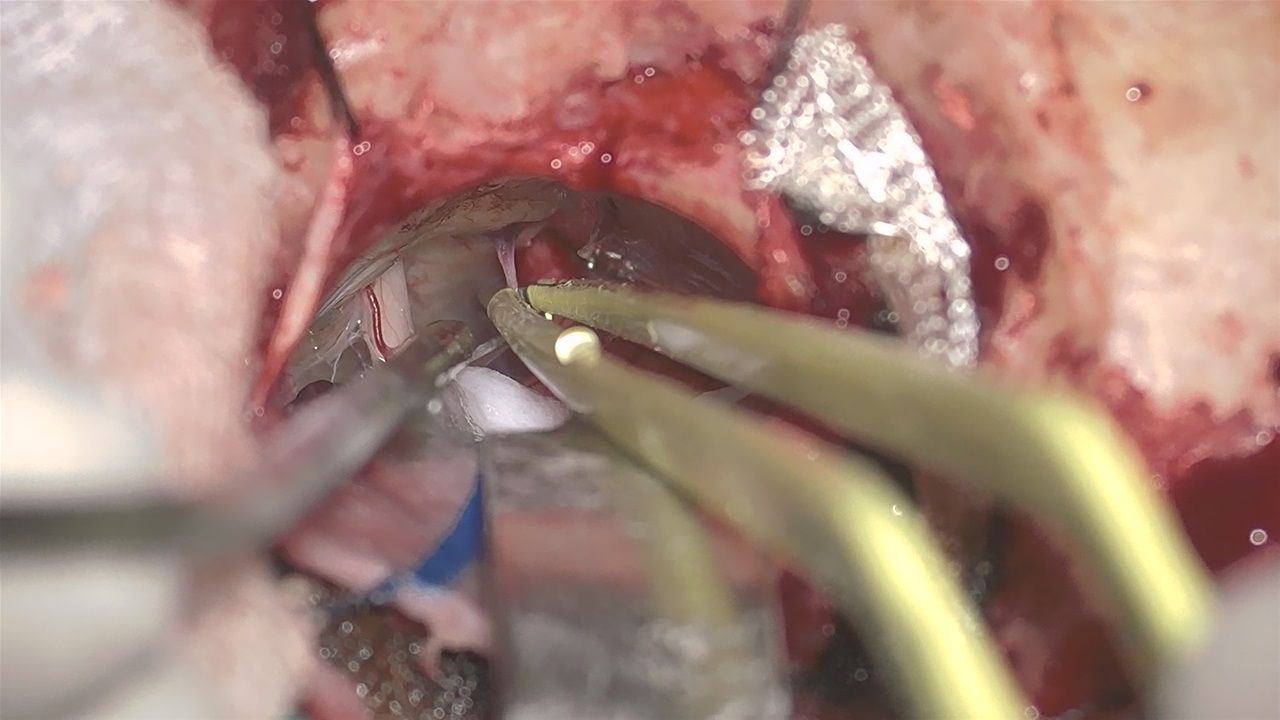
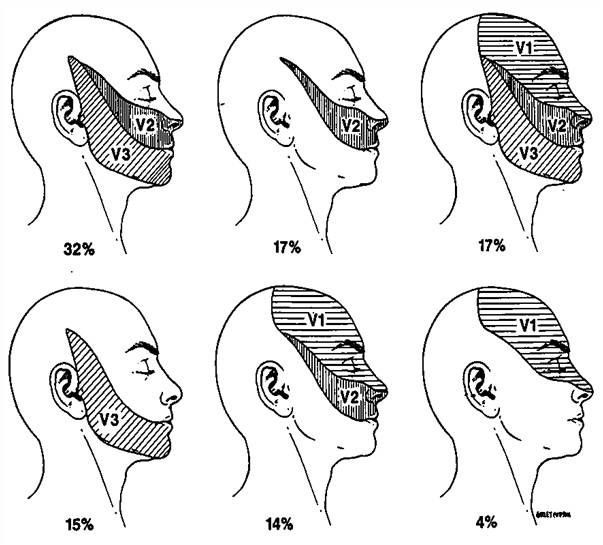 Pain distribution in trigeminal neuralgia
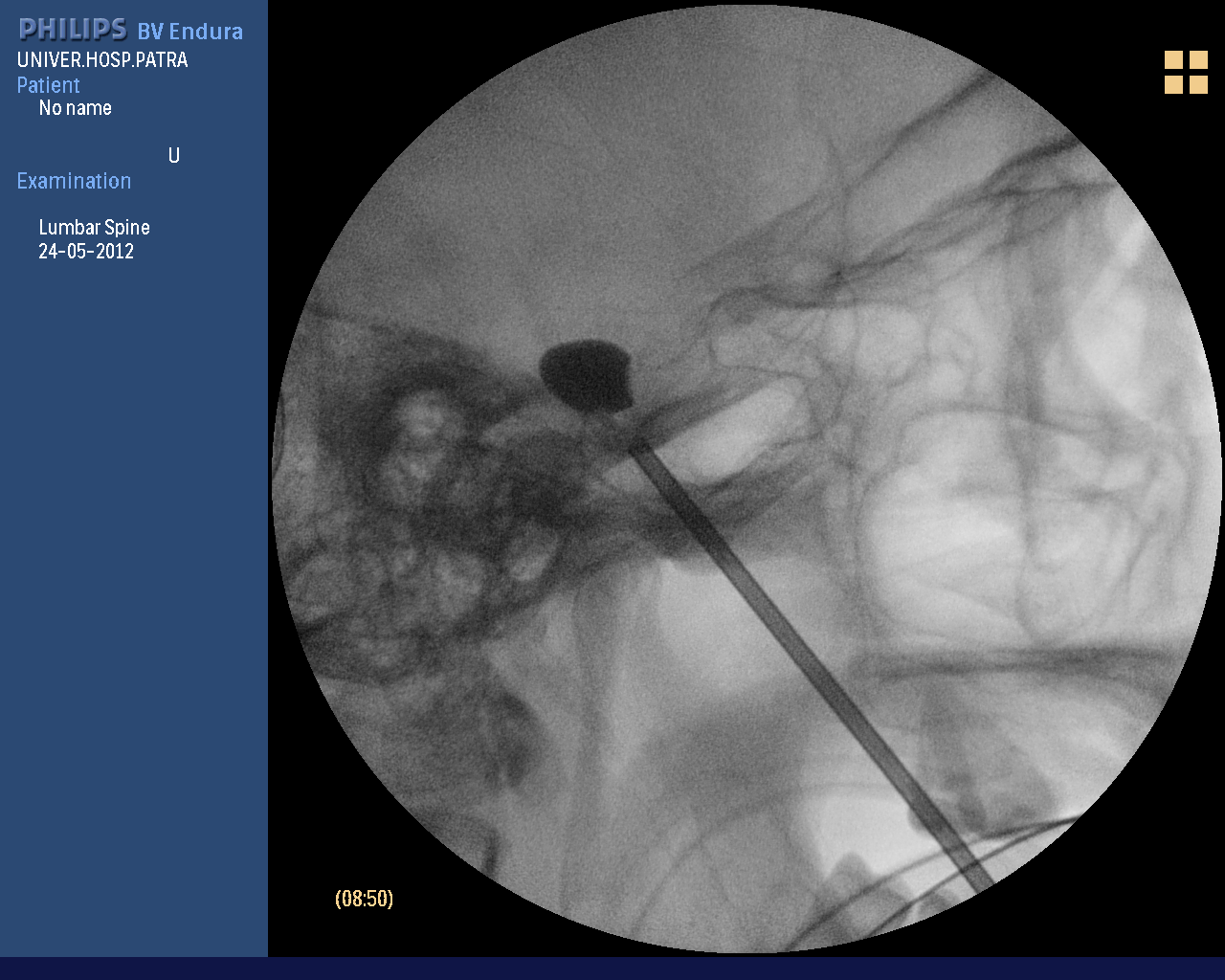 Percutaneous balloon compression for trigeminal neuralgia
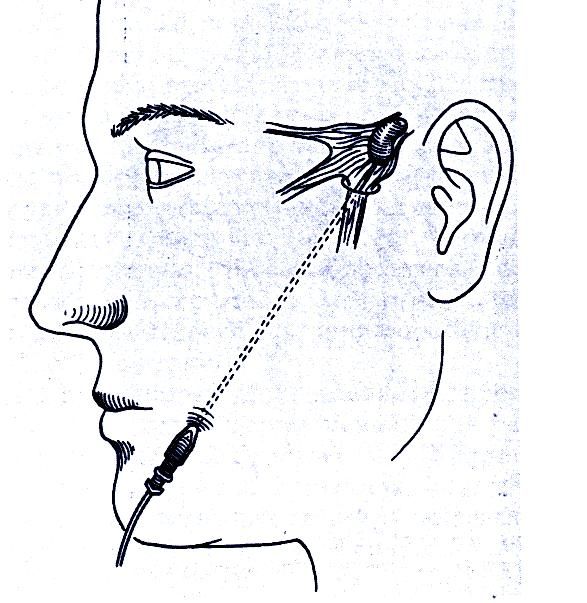 Percutaneous technique for trigeminal neuralgia.